




I travel a lot for work. Mostly by car as I like to always have my “insurance policy(s)” with me. I fly only when I must go to conventions in the Mid-West or West Coast. Having said that, two years ago I was coming back from Dallas, and I had a layover in Atlanta.
And my flight got cancelled to Charlotte. (I know, shocker, right?)
So, they had to put me up for the night. Luckily, I had my ARK pack ,a pair of drawers, a t-shirt and socks as my checked luggage was “somewhere” apparently.
Comforting.
I’m glad I did not bring nor check my insurance policies, because I am sure TSA would not be, how do I say, “helpful” if I was not near my bag with said provisions of protection.
So, with time to kill waiting for the shuttle to bring me to my hotel, I decided to do what I always do and that is to run a threat assessment of my current situation. And although not dire by any means, Murphy’s Law was in the moment, slightly, but there, nonetheless. It is here that I am glad these situations occur as it forces me to create; “What-if” scenarios. And the stage was set for my Airport Egress; I just needed to think through what I would do.
Now, before I go into my scenario, I by no means want you the reader to think that this is ok what I am about to explain. It is not. In this scenario, you are in survival mode in the WORST imaginable way, and I do not condone theft as a means to an end, but as they say, sometimes desperate times require desperate measures. So below, this is what I would do in the worst possible scenario given my less-than-ideal circumstances.
SCENARIO: (MAXIMUM PRESSURE TEST)
I am trying to fly home to my family when my flight in Atlanta is cancelled. (That is the beauty in creating these scenarios because if you are partially in the moment, it is a lot easier to be laser-focused on your strategy and P.A.C.E. which stands for Primary, Alternate, Contingency and Emergency plan). And then suddenly, the airport T.V.’s start showing that nineteen major cities have been hit by small nuclear blasts. As soon as I see what is going on, people start to congregate in droves to the T.V.’s, glued to them to get intel.
Me? I absorb and process in nanoseconds.
First on the docket is to get moving. Second, try to either text or call my family to tell them my plans.
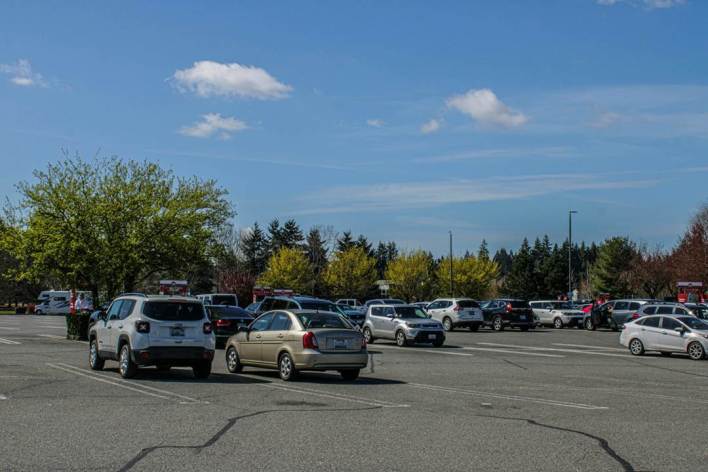
Next, off to the airport parking garage. And this is where the pressure test gets uncomfortable. Conventional transportation is quickly disappearing, I am 225 miles from home, and I have to decide how far I am willing to go to get back to my family. In this absolute worst-case scenario, I may reach the point where I decide to take a vehicle that does not belong to me. That is theft. I am not going to dress it up and pretend it is anything else.
The point of this scenario is not to explain how I would steal a vehicle, nor is it to give someone a roadmap for doing it. The point is to force myself to confront where my normal legal and moral boundaries might collide with survival when every conventional option has failed.
Would I actually cross that line? I pray I am never in this type of situation and must find out. But that is exactly why I pressure-test scenarios like this now, sitting comfortably and thinking clearly, instead of waiting until the world around me has gone completely sideways to wrestle with where my moral boundaries end and survival begins. Desperate circumstances do not magically make a wrong action right. They do, however, force you to think about decisions most people would rather never consider.
In this scenario, the decision is unfortunately clear. I know what decision I would make to get home.
The goal is now simple.
SURVIVE.
I either need to find an egress close to the airport depending on how bad the situation is or beat feet onto the secondary and tertiary back roads and head north as far as the vehicle can take me. I do not have my scooter, so my only option is to push the truck as far and fast as I can because every minute counts in this scenario. There is no stopping for food, or bathroom breaks.
The mission: Put miles in the rearview mirror. PERIOD.
AFTERTHOUGHTS:
I normally write about possible next steps in these articles to empower you, the reader, to do your research before you travel or embark on preparedness matters such as:
- Consider having an aviation egress
- Take a foraging class
- Bring an ARK pack or a Get-home bag
- Always have paper state maps on you and so on.
But I wanted to convey something more thought-provoking as I am not trying to sell you on the apocalypse, I use it as a laboratory as these scenarios can be intentionally extreme. The purpose is not to predict what will or might happen in the future, but to pressure-test every part of your plan when conventional options go all to Hades in a handbasket. And you do not need to have worn a military uniform to know that in life, if it CAN go wrong, well, many times it will.
I call this type of progression preparedness the “Tertiary Mobius.” Within each module of preparedness lives an ever-oscillating mobius of decisions that stay constantly fluid. Conditions change – priorities change – capabilities and skills interact and overlap – then the next decision changes. Preparedness does not end because you bought all kinds of equipment and have a bag. On the contrary, that is not even really the beginning. It is a baseline. The potential scenario does not care how much training you have or what gear you own. It is how you manage the curve ball of life that matters in the end. Because sometimes, desperate times does certainly call for desperate measures.
CLOSING:
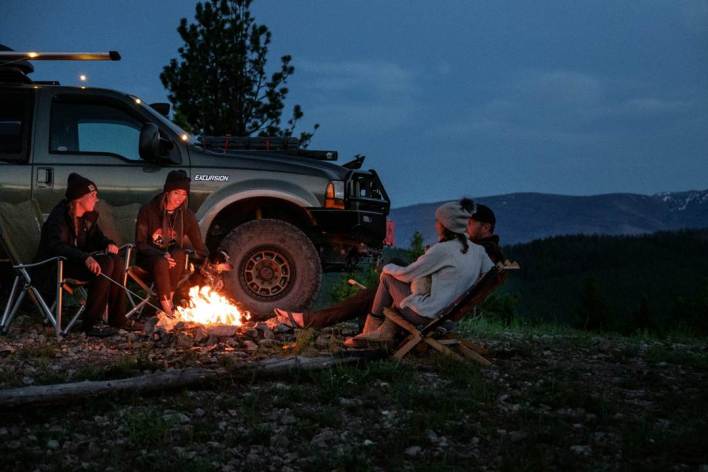
This article and multiple others I have authored are meant to challenge you not in a fearful way (fear is not from the Lord 2 Timothy 1:7) but in a “let’s-sit-around-the-campfire-and-run-through-some-plausible-scenarios” way. And it is here, in a controlled environment, to ponder what could be, hopefully helping you one day if something does happen that you never expected.
Continue to keep the faith, keep preparing not just with equipment, but mentally, emotionally, physically, and most of all, spiritually. You’ve got this!
Sgt. Silverman
DISCLAIMER:
I am not a licensed nutritionist, financial advisor, or medical doctor. The information in this article is for information purposes only and does not replace professional treatment, diagnosis, or advice. Always check with your physician or qualified healthcare provider with any medical questions, and never disregard professional medical advice based on something you read here.
COPYRIGHT NOTICE
© 2026 Sgt. Silverman / Tertiary Prepper. All Rights Reserved.
This article and all original works published under the pseudonym Sgt. Silverman are the exclusive intellectual property of the author. No portion of this publication may be reproduced, distributed, transmitted, republished, copied, or adapted in any form or by any means without the prior written permission of the author or publisher.
Proper attribution and written permission are required for any use beyond applicable fair use. Unauthorized reproduction, plagiarism, or commercial use may be subject to enforcement under applicable United States copyright laws.
AI-Assisted Visuals & Examples
If you have been reading Tertiary Prepper for any length of time, you have noticed charts, graphs, calculations, and visuals that explain preparedness concepts in ways you do not normally see discussed. Many of those examples were created with the assistance of artificial intelligence—but only after I gave it extremely specific instructions on what I wanted to teach.
I do not use AI to create my preparedness philosophy. I use it to help visualize it.
Most tertiary concepts discussed throughout this magazine—such as Sustainment Foraging, Pressure Testing, The Autonomous Recovery Kit (ARK), The Quiet Food Equation, and other original frameworks—are my own ideas and observations. AI simply helps me communicate those concepts through charts, graphics, and examples that make them easier to understand.
Preparedness is rarely black and white. There are very few absolute right or wrong answers—only different experiences, different priorities, and diverse ways of solving the same problem. My hope is that these articles simply give us another reason to sit around the campfire, challenge conventional thinking, and ponder practical solutions together.




