


About seven years ago I took a wild edibles course. I live in the Carolinas, and being originally from New Hampshire, I wanted to know everything I could about the native plants here, especially in case of a survival situation. My normal training diet is protein-heavy, but an austere survival situation changes the equation: calories, fat, carbohydrates, protein, hydration, and the energy required to obtain food all matter. It was in that class that I realized, “If I cannot kill game, or acquire other quiet food such as fish, snakes, frogs, and turtles, I am going to need another way to supplement what I can find if I want to survive an austere situation.”
And I thank myself every day for taking that $75 foraging course, because I learned not only what is edible in my home state, but what I should PRIORITIZE first, if I am in a survival situation.
Let me just jump into this.
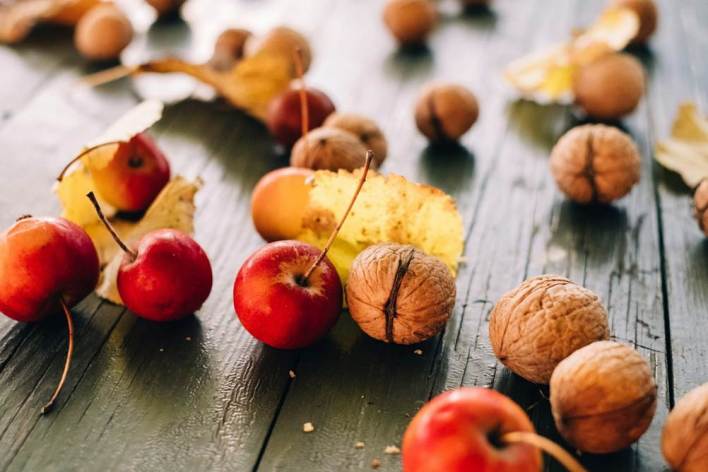
If you know anything about wild edibles, you probably know that dandelion greens are edible. But they are not particularly protein-dense: raw dandelion greens contain about 2.7 grams of protein per 100 grams. Walnuts, by comparison, provide roughly 4.3 grams of protein in a 28-gram (one-ounce) serving, along with far more calories and fat. In a survival situation, that difference matters. Every calorie you spend gathering food is a calorie you have to replace. You could spend a long time gathering low-calorie greens, or you could learn beforehand which locally available nuts, seeds, and other wild foods provide more nutritional return for the effort. Greens still have value; the point is to understand what to prioritize.
“And I thank myself every day for taking that $75 foraging course, because I learned not only what is edible in my home state, but what I should PRIORITIZE first, if I am in a survival situation.”
SCENARIO: (MEDIUM PRESSURE TEST)
It is day four of your foot journey back to Virginia as you trudge mind-numbingly along to link up with your family after a large-scale emergency has disrupted transportation and normal services. The highway system is effectively unusable, public safety is deteriorating, and Murphy’s Law has decided to show up and give you a big ole’ hug.
You are hungry, exhausted, and as great a shape as you are in, you have only traveled thirty-two miles in four days, and you have one hundred and eighteen more to go. You don’t have time to fish, or hunt, or do anything really as time is of the essence. Although you are off the highway by a quarter mile in the woods and following it as a makeshift handrail, you can hear gunfire popping off sporadically as those that are on the highway are almost assuredly not receiving any quarter from those that have needs and are more powerful and morally bankrupt.
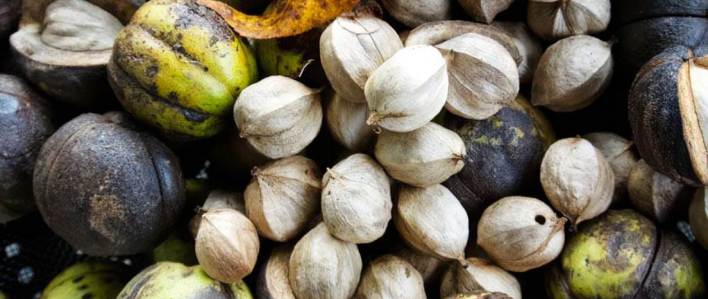
You continue scanning the woods for anything edible, and luckily, it is early fall and the nut trees in southern Virginia are starting to drop their precious cargo. You recognize hickory trees and nuts you have previously learned to identify, so you begin gathering what you can find. You inspect them for obvious damage and use a simple float test to help screen the nuts for quality, knowing that it does not replace positive identification. You remove the husks, toss the sound nuts into your backpack, and keep moving.
In ten minutes, you have thirty-seven.
You continue on, hoping to come across a small stream, brook, or even a river. You thank yourself for taking those wild edibles courses because right now, every bit of knowledge matters, and any additional food you can safely forage would be a Godsend.

Next Steps:
Before I go any further, I know the above scenario might seem a little farfetched. But is it? I do not benefit from selling fear. But I do get to create a scenario for you, the reader, to understand the importance of how to potentially handle that type of situation. Before said scenario becomes a reality, you still have time to prepare yourself so that your chances are only multiplied in a survival situation, not in deficit. Here is what I would do if I was all new to this:
- Take a wild edibles course in your immediate area. I made a Tip of the Week (TOTW) for “Foraging Classes Near Me.” This is a great beginning because local instruction helps you learn both edible species and dangerous look-alikes where you actually live.
- Get access to a reputable regional wild-edibles field guide. Buy one, borrow one, use the library, or pick up a used copy. A hard copy is valuable when the power is out or your phone is unavailable.
- Start learning your wild plants and nuts through in-person classes, videos, books, and so on.
- NEVER eat a wild plant, nut, seed, or mushroom unless you can positively identify it and distinguish it from dangerous look-alikes. There is no universal taste, float, smell, or “edibility test” that makes an unknown wild food safe.
- Avoid harvesting along busy roads, treated rights-of-way, contaminated lots, or other questionable sites. Roadside soil and vegetation can contain traffic-related pollutants, road salts, herbicide residues, and other contaminants; the risk varies by location and traffic level.
- Learn the nut species in your area before you need them. Confirm species, proper preparation requirements, and condition before eating. A floating or sinking nut can help indicate quality in some contexts, but it does not prove that an unknown nut is edible.
- This is my opinion, but I would hold off on learning edible mushrooms in the beginning. For me, it was a lot just learning about wild edibles, and the different types of wild nuts, throwing mushrooms into the mix could be overwhelming to some.
- Practice with correctly identified wild foods now, not for the first time during an emergency. Learn what they taste like, how your body tolerates them, and how much work it takes to gather a useful amount.
- Learn to cook with what you’re foraging for.
- Once you have become comfortable, be sure to pass your knowledge on to others.
Closing:
Today is 9/1/26. Whatever food prices or availability look like tomorrow, you still have time today to learn what grows around you and how to use it safely. Wild plant foods are not a magic replacement for a complete diet, but learning where calories, fats, carbohydrates, protein, and micronutrients can come from gives you another option when normal food sources are disrupted. That is an excellent Tertiary Prepper skill to develop before you ever need it.
All the best in your wild edibles training and your progression preparedness endeavors!
Sgt. Silverman
DISCLAIMER:
I am not a licensed nutritionist or medical doctor. The information in this article is for educational and informational purposes only and does not replace professional medical or nutritional advice. Wild-food identification carries real risk: some toxic plants and mushrooms closely resemble edible species, and cooking does not necessarily make a toxic species safe. Never consume a wild plant, nut, seed, or mushroom unless you can positively identify it and understand any required preparation. If poisoning is suspected in the United States, contact Poison Control at 1-800-222-1222.
COPYRIGHT NOTICE:
© 2026 Sgt. Silverman / Tertiary Prepper. All Rights Reserved.
This article and all original works published under the pseudonym Sgt. Silverman are the exclusive intellectual property of the author. No portion of this publication may be reproduced, distributed, transmitted, republished, copied, or adapted in any form or by any means without the prior written permission of the author or publisher.
Proper attribution and written permission are required for any use beyond applicable fair use. Unauthorized reproduction, plagiarism, or commercial use may be subject to enforcement under applicable United States copyright laws.
AI-Assisted Visuals & Examples
If you’ve been reading Tertiary Prepper for any length of time, you’ve probably noticed charts, graphs, calculations, and visuals that explain preparedness concepts in ways you don’t normally see discussed. Many of those examples were created with the assistance of artificial intelligence—but only after I gave it very specific instructions on what I wanted to teach.
I don’t use AI to create my preparedness philosophy. I use it to help visualize it.
Many of the tertiary concepts discussed throughout this magazine—such as Sustainment Foraging, Pressure Testing, The Autonomous Recovery Kit (ARK), The Quiet Food Equation, and other original—are my own ideas and observations. AI simply helps me communicate those concepts through charts, graphics, and examples that make them easier to understand.
Preparedness is rarely black and white. There are very few absolute right or wrong answers—only different experiences, different priorities, and different ways of solving the same problem. My hope is that these articles simply give us another reason to sit around the campfire, challenge conventional thinking, and ponder practical solutions together.